
Free tool
Goal deadline calculator
Pick the done date and your pace. See the weeks left, how many 45 minute sprints fit, and checkpoint dates from the finish back to today.
The app times each sprint
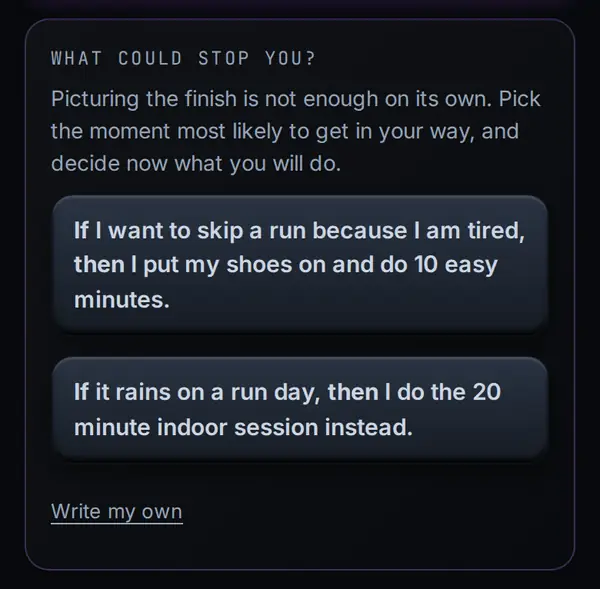
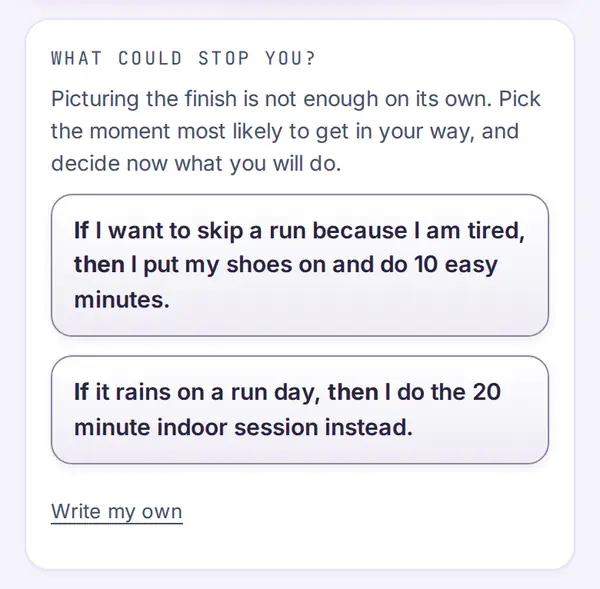
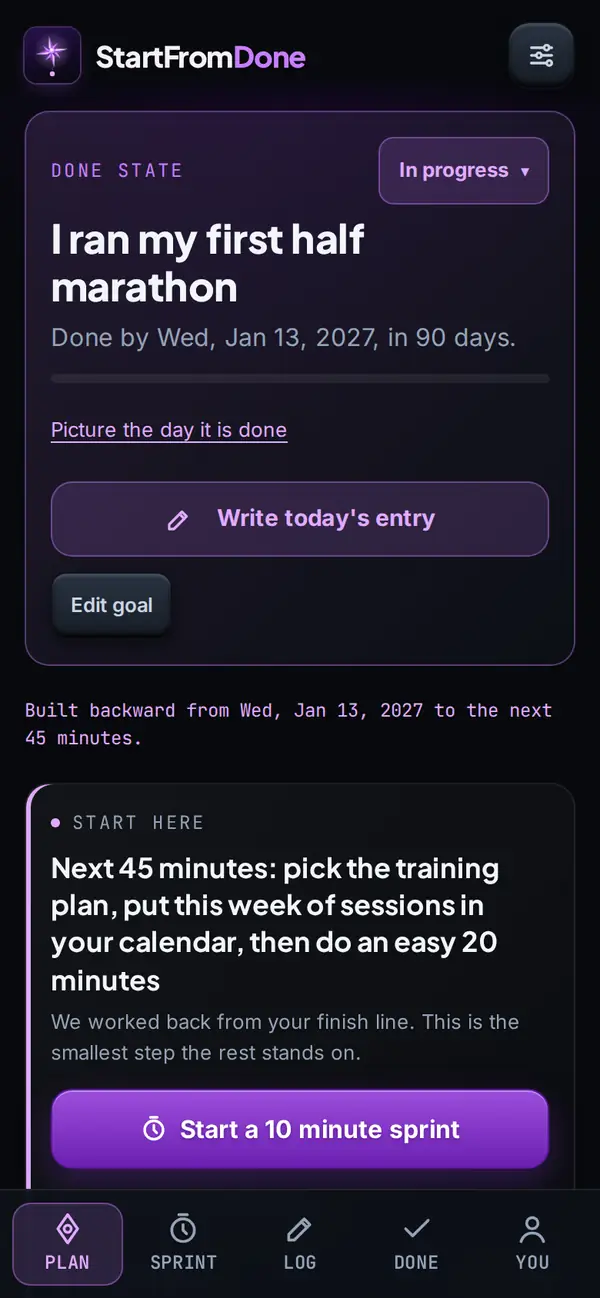
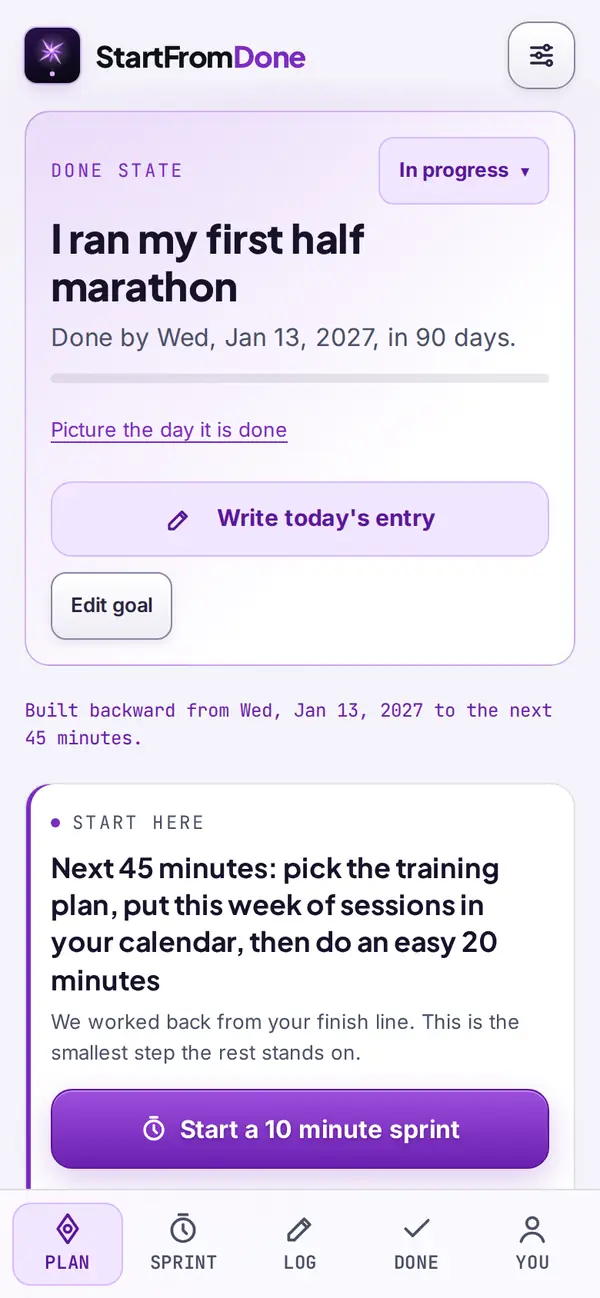
Real app screens. Example goal.
Start freeHow the method works: backward planning
Why count back from the deadline
A date on its own feels far away until it suddenly is not. Counting back from it turns "June" into a number you can plan with: 13 weeks, 65 sprints at five a week, about 49 hours of focused work. That number is honest. It tells you early whether the goal fits the time, or whether the date, the pace or the scope needs to change.
This is backward planning, sometimes called backward scheduling. You fix the finish line and its date first, then work back to checkpoints and finally to the step you can take today. Project teams have planned this way for decades, and it pairs well with research on goal pursuit, which suggests a clear finish helps most when it comes with a plan for the obstacles in the way.
How to use the calculator
- Write the goal as done, if you like. Past tense and specific: "I ran my first half marathon". With a goal line you get milestones, without one you get quarter checkpoints.
- Pick the done date. Use a preset or pick a date. A real date turns a wish into a plan.
- Set a pace you can keep. How many 45 minute sprints in a normal week, not your best week.
- Read the numbers. Days left, weeks left, sprints that fit and hours of focus. If the number looks too small, change the date or the scope now, not in the last week.
- Start the first sprint today. The plan ends at today on purpose. One 45 minute block is enough to begin.
How the numbers are worked out
Days left counts calendar days from today to the done date. Weeks left is days divided by 7, rounded to one decimal. Sprints is days times your sprints a week, divided by 7, rounded down, and hours is sprints times 45 minutes. Each checkpoint also shows roughly how many sprints you will have done by then at your pace. It is plain arithmetic, so it cannot know about holidays or sick days. Leave some room.
Why 45 minutes
A 45 minute sprint is long enough to finish a real piece of work and short enough to start on a busy day. Start From Done builds every plan down to one of them. Read how it compares in backward planning, the 90 day plan guide and plan your year backward.
Questions
How many weeks until my goal deadline?
Pick the done date and the calculator counts the calendar days from today, then divides by 7. It also shows how many 45 minute sprints fit at your pace and checkpoint dates working back from the finish.
How many sprints a week should I plan?
Pick a pace you can keep on a normal week, not your best week. Three to five sprints of 45 minutes is a common start. You can change the number and see the total update.
What are the checkpoint dates?
Without a goal line they are the three quarter, halfway and one quarter points between today and the finish. With a goal line, the calculator uses the same backward plan the Start From Done app makes, with a date for each milestone.
Is anything I type sent anywhere?
The calculation runs on your device. The share link carries the date and the pace only, not your goal. We count anonymous page events, such as that a plan was made, and never the words.